

Mindset Shifts

As we navigated the winding road of autism services and support, one of the biggest revelations we had was the profound impact of our own mindset on this journey. It’s so easy to get caught up in the labels, the limitations, and the deficits that can come with an autism diagnosis, but what we discovered is that a simple shift in perspective can make all the difference in how we approach this experience.
Early on, we found ourselves falling into the trap of seeing autism as a disease or a disability that needed to be “fixed” or “cured.” It’s an understandable reaction, especially when you’re facing so many unknowns and challenges. But over time, we started to realize that this way of thinking was holding us back and limiting the possibilities for our daughter’s growth and development.
To find out more click on the question link:
How can I shift my mindset to better support my child with autism?
The turning point for us came when we started to reframe autism as a unique neurological condition – not something to be ashamed of or burdened by, but simply a different way of experiencing and interacting with the world. This shift in mindset opened up a whole new realm of possibilities and approaches that we hadn’t considered before.
Instead of trying to “normalize” our daughter’s behavior or force her into nan arbitrary mold of what a “typical” kid should look like, we started to focus on understanding and embracing her unique strengths, challenges, and ways of being in the world. We sought out resources and support systems that could help her thrive on her own terms, rather than trying to change who she fundamentally was.
This evolution in our thinking was greatly influenced by our conversations with autistic adults who generously shared their own experiences and perspectives with us. It was eye-opening to hear firsthand accounts of how damaging and limiting the “deficit” model of autism can be, and how much more empowering it is to approach neurodiversity with a lens of acceptance, understanding, and celebration.
To find out more click on the question link:
What does a neurodiversity-affirming approach actually look like in daily life?
We also started to challenge many of the conventional wisdom and assumptions that we had absorbed from the mainstream medical community. Instead of just accepting the notion that autism is a “lifelong disability” that requires intensive intervention and remediation, we started to explore alternative frameworks that emphasized strengths-based support, self-advocacy, and accommodations that could help our daughter navigate the world on her own terms.
This shift in mindset didn’t happen overnight – it was a gradual process of unlearning and relearning, of questioning our own biases and assumptions, and of opening ourselves up to new ways of seeing and supporting our daughter. But the more we leaned into this new perspective, the more we started to see the incredible potential and possibilities that existed within our daughter and within the broader autism community.
A Journey of Love and Acceptance
Of course, this journey of shifting our mindset was not always a smooth or easy one. There were plenty of moments of doubt, fear, and frustration along the way – times when we found ourselves slipping back into old patterns of thinking or feeling overwhelmed by the challenges we faced.
But through it all, there was one constant that kept us grounded and motivated: our unconditional love for our daughter. No matter what struggles or setbacks we encountered, we never lost sight of the fact that our daughter was a beautiful, worthy, and complete human being, exactly as she was, and she deserved the rest of the world to see her that way.
This unwavering commitment to love and acceptance was the foundation upon which all of our other mindset shifts were built. It gave us the courage to question the status quo, to advocate for our daughter’s needs, and to seek out alternative approaches and resources that aligned with our values and priorities.
It also helped us to cultivate a deep sense of empathy and understanding – not just for our daughter, but for the wider autism community and for all those who are navigating the challenges of neurodiversity in a world that is not always welcoming or accommodating. We started to see the incredible resilience, creativity, and wisdom that exists within this community, and we felt honored to be a part of it.
One of the most profound shifts we experienced was in our understanding of what it means to be a “good” parent to a child on the autism spectrum. In the early days of our journey, we often found ourselves falling into the trap of comparing our daughter’s progress and milestones to those of her neurotypical peers – and inevitably feeling like we were falling short.
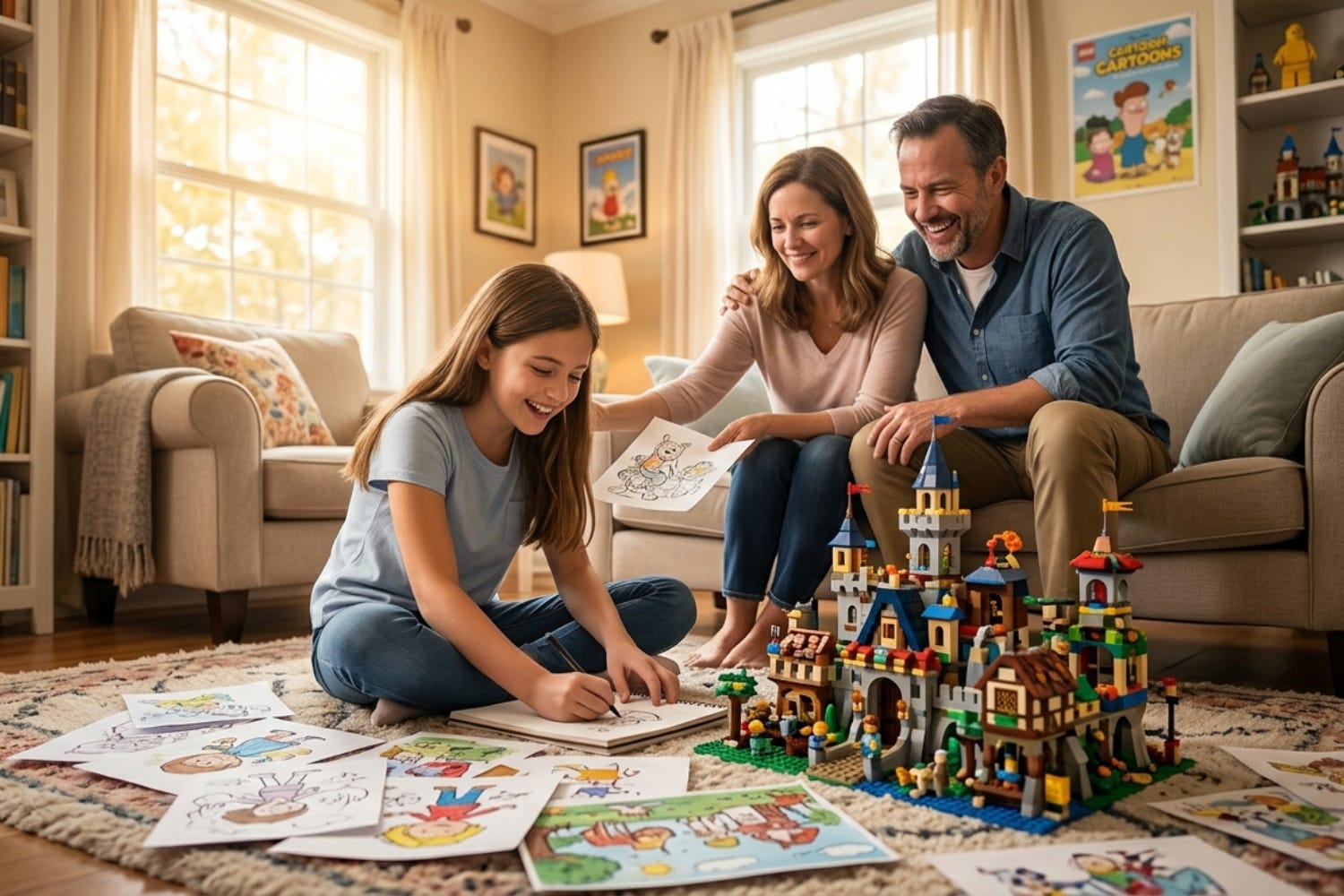
As we started to embrace a more neurodiversity-affirming perspective, we began to let go of those arbitrary benchmarks and expectations. We realized that our job as parents was not to “fix” or “cure” our daughter, but rather to love her unconditionally, to support her in discovering and developing her unique gifts and talents, and to advocate fiercely for her right to inclusion, accommodation, and respect in all areas of life today, tomorrow and always.
This shift in our parenting mindset was not always easy – there were times when we had to have difficult conversations with family members, educators, or healthcare providers who were not on the same page. There were moments when we had to stand up for our daughter’s needs and rights, even when it meant ruffling some feathers or going against the grain.
Through it all, we found strength and inspiration in the incredible community of autism parents, self-advocates, and allies who were walking this path alongside us. We learned so much from their stories, their insights, and their unwavering commitment to creating a more inclusive and empowering world for all individuals on the spectrum.
Cultivating Joy and Resilience
As we continued on this journey of mindset shifts and paradigm changes, one of the most important lessons we learned was the power of cultivating joy and resilience in the face of challenges. It’s easy to get bogged down in the day-to-day struggles and stresses of parenting a child with autism – but we discovered that making a conscious effort to find moments of happiness, connection, and celebration could make all the difference in our overall well-being and outlook. The importance of celebrating these moments is also key. We always told anyone who would listen when our daughter had a breakthrough or accomplishment.
This looked different for every member of our family. For our daughter, it might mean finding joy in her special interests, like her Legos or music or art, and carving out time and space for her to engage with those passions. For me and my wife, it meant practicing gratitude, connecting with each other and with our support system, or engaging in activities that bring us peace and perspective.
We also made a conscious effort to reframe the challenges we faced as opportunities for growth, learning, and resilience-building. Instead of getting caught up in a cycle of negative self-talk or blame, we approached each obstacle with a spirit of curiosity, creativity, and determination. There were opportunities, not failures. Even with that, in general, failure is part of the recipe for success, we know that in business and in life.
This wasn’t always easy, of course – there were plenty of days when we felt overwhelmed, exhausted, or just plain frustrated. But by making a commitment to cultivating joy and resilience as a family, we found that we were better able to weather the storms and stay focused on what really mattered: supporting our daughter in living her best life and finding meaning and purpose in our own journeys as parents and advocates. As a Christian, we know happiness is fleeting, but joy is a constant to operate in when we know God is so, and the challenges he bestows on us are what he knows we can overcome, without complaining.
The Power of Neurodiversity
Perhaps the most profound mindset shift we experienced on this journey was the realization that autism is not something to be “fixed” or “cured,” but rather a vital and valuable part of the human experience. This shift was greatly influenced by our exposure to the neurodiversity movement, which emphasizes the importance of recognizing and celebrating the diversity of human brains and ways of being in the world.
Through our conversations with autistic self-advocates, our reading of neurodiversity-affirming literature, and our own experiences with our daughter, we started to see autism not as a deficit or a disorder, but as a natural and meaningful variation in human neurology and psychology. We began to recognize the incredible strengths, insights, and perspectives that autistic individuals bring to the world – and to see how much we all stand to gain by embracing and supporting neurodiversity in all its forms.
This shift in perspective had a profound impact on how we approached our daughter’s education, therapies, and overall support plan. Instead of trying to “normalize” her behavior or get her to “fit in” with neurotypical expectations, we started to focus on helping her develop the tools, strategies, and accommodations she needed to thrive as her authentic autistic self. In time, our daughter refused special considerations and handling, preferring to stand on her own two feet for who she is.
We advocated for an educational approach that played to her strengths and interests, rather than trying to force her into a one-size-fits-all curriculum. We sought out therapies and support that emphasized self-regulation, communication, and self-advocacy skills, rather than compliance or behavior modification. And we made a conscious effort to surround our daughter with positive autistic role models and mentors who could help her develop a strong and positive sense of identity as an autistic person. Academically, her skills and intelligence enabled her to maintain a 90 average ultimately in high school, shining in Math, Science, history and English along with her creative major in cartooning.
Of course, embracing neurodiversity didn’t mean ignoring the very real challenges and support needs that can come with autism. We still had to, at least initially, navigate the complex landscape of services, accommodations, and interventions – and there were days when we felt overwhelmed or unsure of the path forward. But in time, the recipe of solutions we put together for our daughter really worked, but also because she did the work. Her determination, smarts and skill, once unleashed, became a powerful force.
But by shifting our mindset to one of neurodiversity and acceptance, we found that we were better able to approach these challenges with a sense of hope, resilience, and creative problem-solving. We were able to see our daughter’s autism not as a barrier to overcome, but as an integral part of who she is – and to focus our energy on helping her live her best life as an autistic person, rather than trying to change or “fix” her fundamental nature. And she responded, knowing that her parents were “all-in”, to help her raise her game to levels, even today, we are astonished to see.
A Call to Action
As I reflect on our journey of mindset shifts and paradigm changes, I can’t help but feel a sense of gratitude and awe for all that we have learned and experienced along the way. This path has not been an easy one – there have been many moments of doubt, fear, and frustration. But through it all, we have emerged stronger, wiser, and more committed than ever to creating a world that truly values and supports neurodiversity in all its forms both for our daughter and for others on the spectrum.
If there is one message I could share with other parents who are just beginning this journey, it would be this: trust your instincts, question everything, and never stop advocating for your child’s unique needs and strengths. The road ahead may be uncertain and even scary at times – but know that you are not alone, and that there is an incredible community of support and wisdom waiting to welcome you with open arms if you look for it and participate.
To find out more click on the question link:
How can I effectively advocate for my child in school and healthcare settings?
Embrace the power of mindset shifts – the simple but profound realization that how we choose to see and approach this journey can make all the difference in the world. Cultivate a spirit of love, acceptance, and unwavering belief in your child’s potential, and let that be the compass that guides you through even the toughest of times. When it seems hopeless in a moment, know it will pass. Happiness and sadness are fleeting and only in the current moment. It too shall pass.
And above all, remember that your child is perfect and whole exactly as they are – not despite their autism, but because of it. Their unique way of being in the world is a gift and a strength, not just a deficit or a disorder. By supporting them in living their best lives as autistic people, you are not only changing their world for the better – you are helping to create a more inclusive, empowering, and vibrant society for us all.
So let us go forth with open hearts and minds, ready to challenge the status quo and create a world that truly celebrates the infinite diversity of human experience. Let us be the change we wish to see – for our children, for ourselves, and for the generations to come. The journey may be long and winding, but together, we can make a difference – one mindset shift at a time.
Have questions or want to collaborate on autism or advocacy?
Reach out to Richard Schreiber and explore his bestselling work.
Richard Schreiber: LinkedIn Profile
Email: Email: rschreiber@autisminnovationcommunityfoundation.org
Chat with Richard’s AI Clone: richardschreiberai.com
Best selling books:
Autism Care Revolution
The Faith Based Guide to AI
AI in the Classroom
Law Partner in Heels: Billable Hours Beautiful Life